


What is an air source heat pump? A plain-English guide for new home buyers
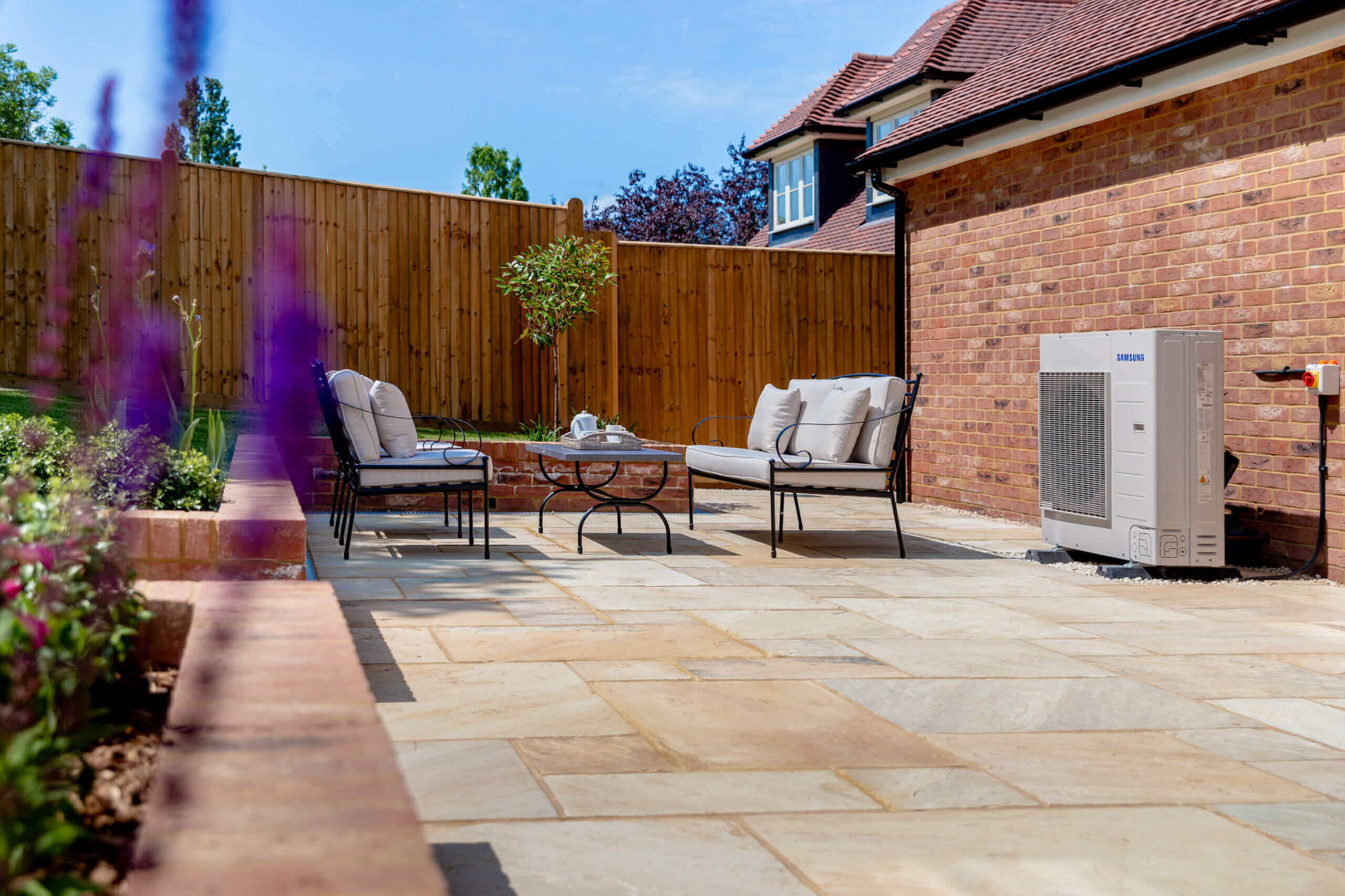
If you are buying a new home in 2026, you will almost certainly encounter an air source heat pump.
It may be the first time you have lived with one. The terminology can sound technical, the comparisons with gas boilers are not always straightforward, and the information available online ranges from genuinely useful to misleading.
This is a plain-English explanation of what an air source heat pump is, how it works in practice, what it costs to run, and what to expect when you move into a home that has one. Every Remmus home is heated by an air source heat pump as standard. We use Samsung systems throughout, paired with Joule underfloor heating to ground floor rooms and thermostatic radiators to upper floors. What follows is based on how these systems actually perform rather than how they perform in laboratory conditions.
What an air source heat pump actually does
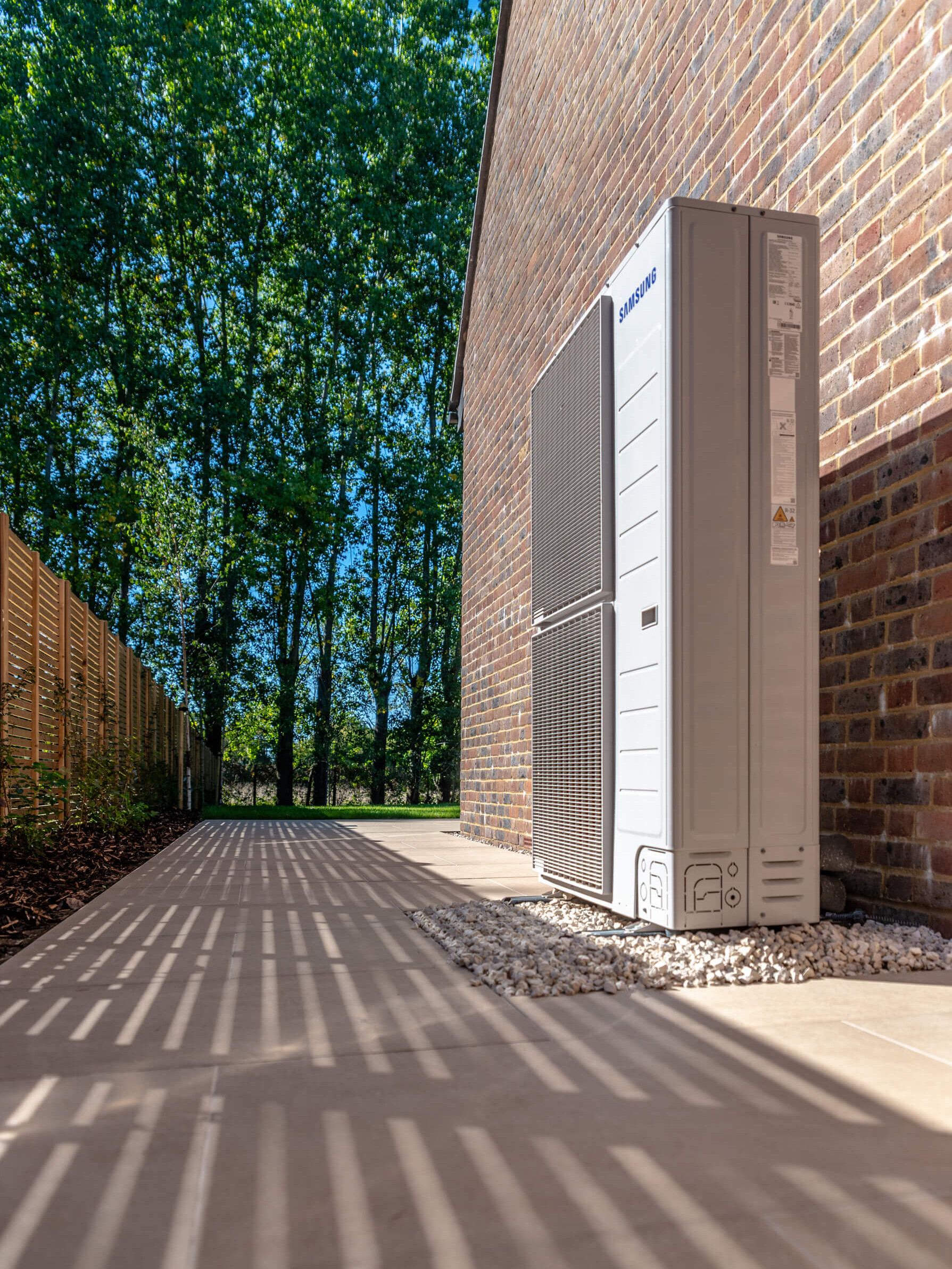
An air source heat pump extracts heat from outside air and moves it into your home. It works on the same principle as a refrigerator, but in reverse. Modern systems operate efficiently well below freezing, which means the British climate is not a problem.
The unit sits outside the house. Inside, the experience is broadly similar to a conventional heating system. Underfloor heating feels the same whether it is driven by a heat pump or a boiler. Thermostatic controls work in the same way. The main difference is in how you use it — more on that below.
How it compares to a gas boiler
A gas boiler produces heat quickly at high temperatures. A heat pump works more efficiently at lower flow temperatures and performs best when run consistently rather than in short bursts. The practical upshot: set a steady background temperature and leave it, rather than switching the heating on and off through the day. Most people find this more comfortable than the heat-and-cool cycle of a conventional boiler.
Running costs depend on your tariff and usage. Heat pumps use electricity rather than gas, and electricity costs more per unit — but a well-specified heat pump delivers two to four units of heat for every one unit of electricity it consumes. As gas prices have risen and heat pump technology has improved, the running cost gap has narrowed considerably.
Running cost figures are indicative. Actual costs depend on energy tariffs and household usage. Current guidance at energysavingtrust.org.uk.
Underfloor heating and why the two work together
Every Remmus home has underfloor heating to all ground floor rooms as standard. Underfloor heating runs at the lower water temperatures at which a heat pump operates most efficiently — the two systems are designed for each other. Heat rises evenly across the whole floor rather than from a single radiator, which means no hot spots and no cold corners. The floor is warm underfoot. Most people who live with it find it difficult to go back.
EV charging and photovoltaic panels
Every Remmus home includes EV charging as standard, which connects naturally to the heat pump as part of the broader shift away from fossil fuels. Running an electric vehicle from a home with a heat pump means the energy costs of both heating and transport can be substantially reduced compared to a conventional home with a gas boiler and no EV provision.
Not every Remmus development includes photovoltaic solar panels — this depends on the orientation and characteristics of the specific site. Where they are included, they generate electricity that can power the heat pump and charge an electric vehicle, reducing what is drawn from the grid. In summer months, a well-positioned array can cover a meaningful proportion of household electricity use.
What to expect when you move in
Run the system consistently rather than on demand. Avoid turning it off when you go out — reheating a cold house costs more than maintaining a steady temperature. Your installer will commission the system before handover and walk you through the controls. Samsung systems, which Remmus uses throughout, have straightforward digital controls and a smartphone app.
If you have questions about the heating system in a specific Remmus development, get in touch and we will talk you through how it is configured for that home.